.avif)
Deciding to get a divorce involves careful evaluation of personal, legal, and family factors. In Texas, spouses may file for divorce without assigning fault, but choosing to begin this process requires practical awareness of legal rules, family dynamics, and the long-term effects.
When there is disagreement over issues such as property division, debt, or parenting arrangements, the process may move toward a contested divorce. In those situations, speaking with experienced San Antonio divorce lawyers can clarify how each stage of the process works and what issues Texas courts typically address when disputes remain unresolved.
Why People Start Considering Divorce

Divorce decisions are seldom triggered by a single fight. People often reach this point after patterns of conflict or unmet needs persist over time. Common reasons include:
- Chronic infidelity that undermines trust.
- Emotional or physical abuse, including threats of violence or evidence of dangerous behavior.
- Persistent substance abuse affecting family stability.
- Financial control, secret debt, or repeated dishonesty.
Each of these concerns can signal that marital structure no longer supports personal safety or family well-being.
Texas recognizes both fault and no-fault grounds for divorce. Fault grounds may include cruelty, adultery, abandonment, and felony conviction. Texas Family Code § 6.001 allows divorce when discord or conflict destroys the marriage with no reasonable likelihood of reconciliation.
Divorce Trends That Frame Your Decision in Texas
According to data from the Centers for Disease Control and Prevention (CDC), the U.S. divorce rate in 2022 was approximately 2.4 divorces per 1,000 of the total population, reflecting a long-term decline from rates reported in the early 2000s. Texas follows a similar pattern, with a divorce rate slightly below the national average while still accounting for a high total number of filings due to population size.
CDC data shows that divorce most often occurs among adults in their late 30s through early 50s, many of whom have minor children at the time of separation. Although annual divorce rates have decreased, lifetime exposure to divorce remains common for married adults, particularly during years associated with juggling the demands of parenting and work responsibilities.
Signs That You Are Ready for Divorce
Deciding to pursue divorce often stems from more than mere dissatisfaction with a marriage, and is the product of long term patterns rather than isolated moments.
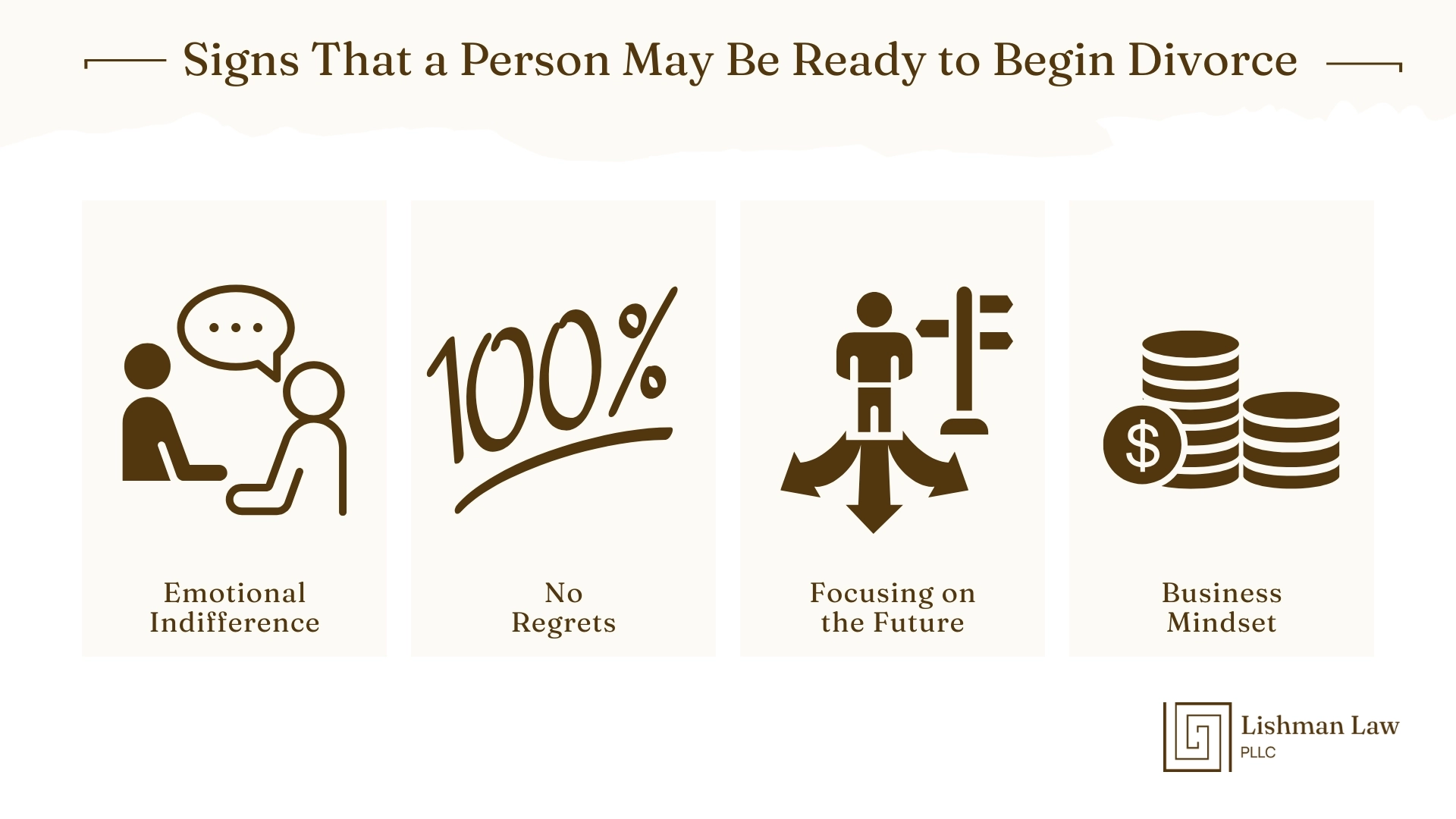
Signs that a person may be ready to begin the divorce process include:
- Emotional indifference: You no longer have the energy to argue. You feel more like roommates than partners, and you have stopped sharing your thoughts or feelings with your spouse.
- No regrets: You have tried counseling, therapy, or trial separations, and the fundamental issues persist. You know you have done everything possible to save the relationship.
- Focusing on the future: Instead of asking "How can we fix this?", you are imagining life alone. You view a future without your spouse with relief rather than fear.
- Business mindset: You are able to set emotions aside to handle the logistics. You have started gathering financial documents and are ready to treat the divorce as a necessary legal transaction.
Beginning the divorce process does not require certainty about every outcome. It often reflects clarity about whether the marriage itself can continue in a functional way.
When Uncertainty About Divorce Requires a Final Check
People who are evaluating “should I get a divorce” often benefit from careful consideration of several questions:
- Have patterns of conflict or unmet needs persisted despite repeated attempts at resolution? Issues persist even when it is obvious that significant change is necessary.
- Are safety concerns present for you or your children? If physical threats, coercive control, or sexual misconduct affects wellbeing, securing safety takes precedence.
- Have you considered counseling or mediation to clarify expectations and explore options without immediate filing? These can reveal whether reconciliation is feasible or if separation is the practical path.
- Do you have a tentative plan for how daily life would function after divorce, including financial and parenting routines? Thinking through logistics often proves more stabilizing than hesitation without planning.
People often remain unsure because emotional readiness differs from legal readiness. Emotional readiness does not require complete certainty about every outcome; rather, it often reflects recognition that the current marriage structure no longer supports health or family stability.
For families in San Antonio, local court procedures, the military presence, and regional housing costs often influence divorce planning related to custody schedules, relocation limits, and property division.
How to Tell Your Spouse About Divorce
After a decision to pursue divorce, communication with a spouse often affects how the process unfolds. When no safety concerns exist, a direct, private conversation can help limit unnecessary conflict. Statements that focus on the decision itself and the immediate legal steps often reduce the likelihood of escalation.
References to past arguments or blame frequently increase tension and delay resolution. When safety risks exist, protective measures such as limiting contact or implementing legal safeguards should be put in place before any disclosure.
For example, if you’re unsure whether a contested divorce suits your situation, the guidance of experienced family law counsel can clarify stages of the legal process and offer insight into how courts address disputes over children, property, and support.
Legal and Financial Changes After a Divorce Decision
Once a decision to divorce occurs, the focus often shifts from evaluation to preparation. Texas divorce cases follow defined legal steps that affect finances, parenting arrangements, and daily routines.
Types of Divorce in Texas
Texas law does not have distinct categories of divorce, but practitioners often find it helpful to characterize a divorce case based on the level of conflict between spouses:
- Uncontested divorce, when both parties agree on property division, debt allocation, and child-related terms.
- Contested divorce, when disagreement exists over one or more material issues.
- Fault-based divorce, when conduct such as adultery or cruelty becomes legally relevant in disputed cases.
Considerations for Your Children in Texas
For parents, decisions about divorce often revolve around structure rather than preference. Texas uses the “best interest of the child” standard in custody (conservatorship) and possession schedules. Decisions about where each parent lives, how time is shared, and who makes major decisions are determined under this principle.
Statistics show that most custodial parents are mothers, with fathers receiving a smaller share of parenting time on average. These patterns may affect planning if parents approach arrangements without agreement.
Financial and Property Issues Before Deciding

Texas follows community property rules. That means property and liabilities acquired during marriage belong to both spouses equally, regardless of whose name appears on the title or account. Texas Family Code § 3.002 outlines this framework.
Advance review often includes:
- Cataloging assets and liabilities.
- Reviewing bank accounts, investments, and retirement plans.
- Identifying potential separate property, such as premarital assets or gifts to one spouse.
- Identifying equitable claims that may affect the division, such as reimbursement claims or offset.
Early review of debt, property division, and spousal support creates clearer expectations for later steps.
Divorce Support and Next Steps
People who explore whether divorce is a good fit for their circumstances often benefit from structured support. This may include legal counsel, mental health support, financial planning, and child-focused resources.
At Lishman Law, our divorce attorneys in San Antonio address contested and uncontested divorce matters with close attention to statutory requirements and case-specific factors. Individuals who consider divorce may benefit from speaking with one of our attorneys before formal action begins. Contact us to schedule a case evaluation and take an informed step toward resolving divorce-related issues under Texas law.


Considering Divorce and Unsure About Next Steps?
Texas divorce law affects property, debt, and parental rights from the start of the process. Legal clarity early in the process can shape future outcomes. Contact us today.