.avif)
When a marriage ends, it’s not always a straightforward process. If you and your spouse can’t agree on important matters like property division, child custody, or spousal support, a contested divorce is often necessary. This means the court will make the final decisions on these unresolved issues.
A contested divorce in Texas can be complex, but it provides a clear structure for resolving disputes, ensuring that both parties have their day in court. If you’re unsure whether a contested divorce is right for you, Lishman Law’s San Antonio contested divorce lawyers can guide you through each stage, helping to protect your interests and resolve the issues at hand.
When Divorce Is Contested
A contested divorce in Texas occurs when the spouses cannot reach an agreement on one or more critical aspects of their divorce. This may include disagreements over child custody, property division, spousal support, or the division of debts. When these disagreements arise, the court steps in to resolve them fairly.
Why You Might Choose a Contested Divorce
Choosing a contested divorce can be difficult, but it’s the best option when serious disagreements need legal intervention. Below are some of the most common reasons for pursuing a contested divorce:
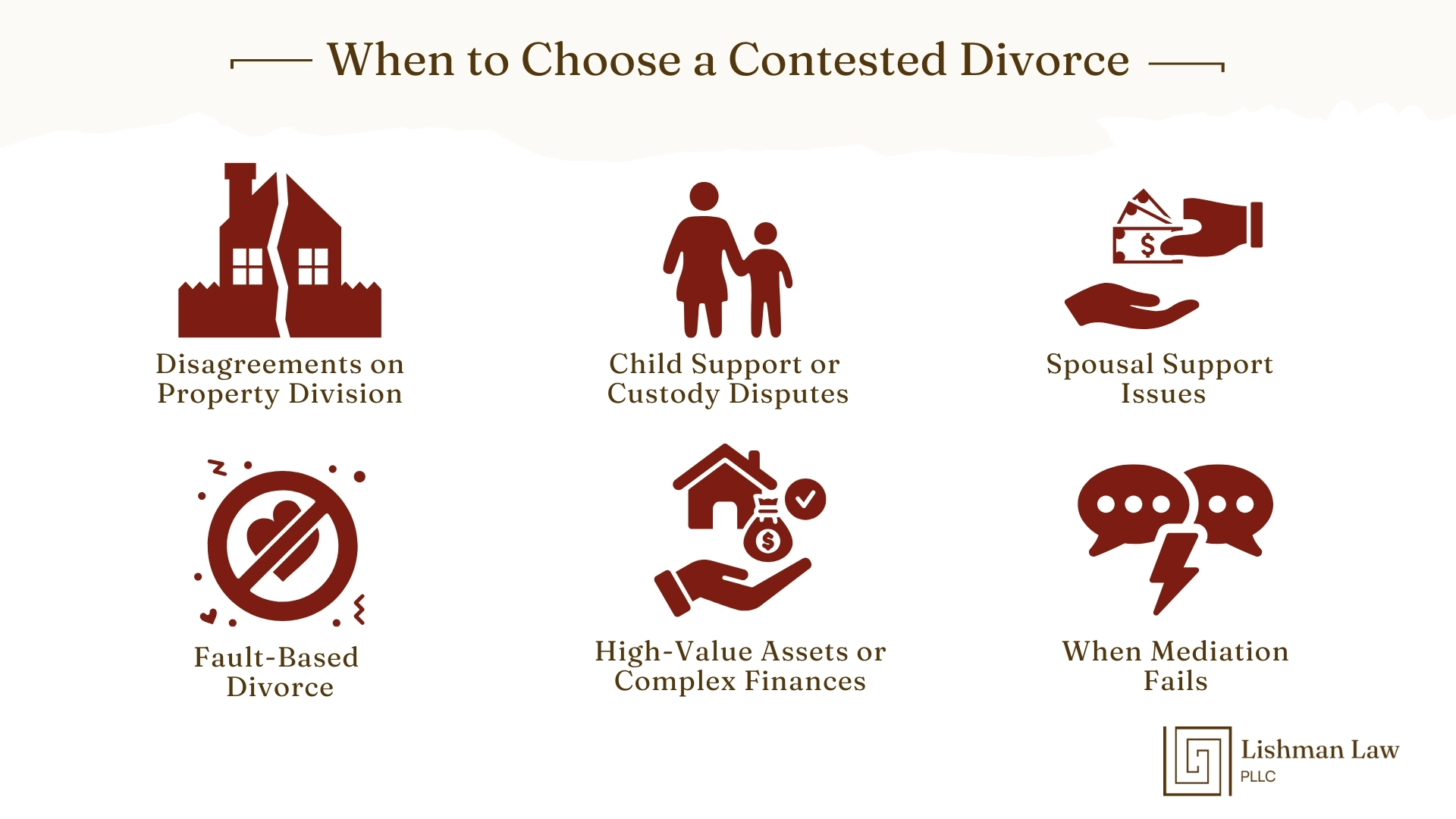
Disagreements You Can't Resolve
If you and your spouse can’t agree on crucial matters like property division or child custody, the court will step in to make a final decision. A contested divorce provides a way to resolve these issues fairly, ensuring both sides have the opportunity to present their case.
When Mediation Doesn’t Work
Mediation is often used to help couples resolve issues outside of court. However, if mediation fails and no agreement is reached, a contested divorce is the next step. The court will make the final ruling on contested issues.
When One Spouse Refuses to Settle

If one spouse is unwilling to compromise or refuses to settle, a contested divorce ensures that the process will continue, and a judge will ultimately make decisions on the outstanding issues.
Protecting Your Interests
If you have substantial assets, children, or other significant matters at stake, a contested divorce ensures that your concerns are addressed. The court will consider your position on property division, custody arrangements, and any financial issues, helping protect your future.
Contested vs. Uncontested Divorce: A Quick Comparison
A contested divorce differs from an uncontested divorce, where both spouses have already agreed on the major terms of the divorce. In contested divorces, the court may need to hold hearings, conduct mediation, or even schedule a trial to finalize the terms of the divorce. These cases often take longer and require more legal intervention.
The table below outlines the main differences in terms of process length, cost, and emotional impact:
Common Disagreements in a Contested Divorce
Contested divorce cases often arise because of disagreements over one or more significant issues. Let’s look at the most common reasons spouses end up in court during a contested divorce:
Property Division
Texas is a community property state, which means most property acquired during the marriage is considered jointly owned and is divided equally. However, issues arise when:
- One spouse claims separate property (assets owned before marriage or received as a gift).
- There are disputes over the value of certain assets, such as the family home, retirement accounts, or a business.
- One spouse believes the division is unfair and wants more of the assets.
Child Custody

Custody of children is often the most emotionally charged issue in a contested divorce. Disagreements commonly occur over:
- Physical custody (where the child will primarily reside).
- Legal custody (who makes decisions about the child's education, healthcare, etc.).
- Visitation or parenting time, especially if one parent wants more time with the children than the other.
Texas courts always prioritize the best interests of the child when determining custody, but parents often disagree on what that means in their case.
Spousal Support
When one spouse requests spousal maintenance (alimony) after the divorce, it can lead to disputes. Factors that affect whether spousal support is awarded include:
- The length of the marriage
- The financial needs of one spouse
- The other spouse’s ability to pay support
Fault-Based Divorce
In a fault-based divorce, one spouse’s actions, such as adultery, abuse, or other harmful behavior, can play a role in the divorce outcome. Although most divorces in Texas are no-fault, fault-based divorce claims can still affect how property is divided and whether spousal support is awarded.
Steps to File for a Contested Divorce in Texas
A contested divorce in Texas is a formal process, and it requires careful attention to detail. Here’s a breakdown of the key steps involved:
1. File the Original Divorce Petition
The first step is for the spouse initiating the divorce (the petitioner) to file the original petition for divorce in the appropriate Texas court.
2. Serve the Divorce Papers
Once the petition is filed, the other spouse (the respondent) must be formally served with the divorce petition. This ensures they are notified and have an opportunity to respond.
3. Respond to the Petition
The respondent has a set period to file a response to the petition. If they don’t respond, the court may proceed without their input, which can lead to an uncontested divorce.
4. Request Temporary Orders
In many contested divorces, either spouse can request temporary orders to address matters like child custody, visitation, or temporary financial support until the final divorce decree is issued.
5. Discovery Process

During the discovery process, both parties exchange relevant financial and personal information to help resolve disputes over assets and debts. This step ensures both sides have a clear understanding of the marital estate.
6. Mediation
Before going to trial, many contested divorce cases require mediation to try to settle disputes. If mediation fails, the case moves forward to a court trial.
7. Court Trial
If the dispute cannot be resolved, the case will go to a court trial where a judge will make the final decision on the contested issues.
Making the Right Decision for Your Divorce
If you and your spouse cannot agree on major issues, such as property division, child custody, or spousal support, a contested divorce may be the best way to protect your interests and move forward with your life.
At Lishman Law, our Texas divorce attorneys are here to ensure that your rights are protected and that you are well-prepared for every step of the contested divorce process. Contact us today to schedule a consultation and take the first step toward resolving your divorce case!


Need Help Resolving Divorce Disputes?
If you're dealing with a contested divorce, we're here to help you get a fair resolution. Contact us for a free case evaluation!