.avif)
When couples reach the point of ending a marriage, the timing can suddenly feel uncertain. Some expect the process to move quickly; others worry it could drag on for months. The truth typically lies somewhere in between.
Under Texas law, most uncontested divorces wrap up in as little as 60 to 90 days, while contested divorces can stretch out for six months or more. Factors like court schedules, cooperation, and the complexity of the marital estate can all influence how long the journey takes.
The San Antonio divorce lawyers at Lishman Law have helped make the process of divorce frictionless for countless clients. This article provides a realistic look at what happens after you file, how long each stage may last, and what can be done to make your divorce smoother and less stressful.
The Timeline for Divorce in Texas
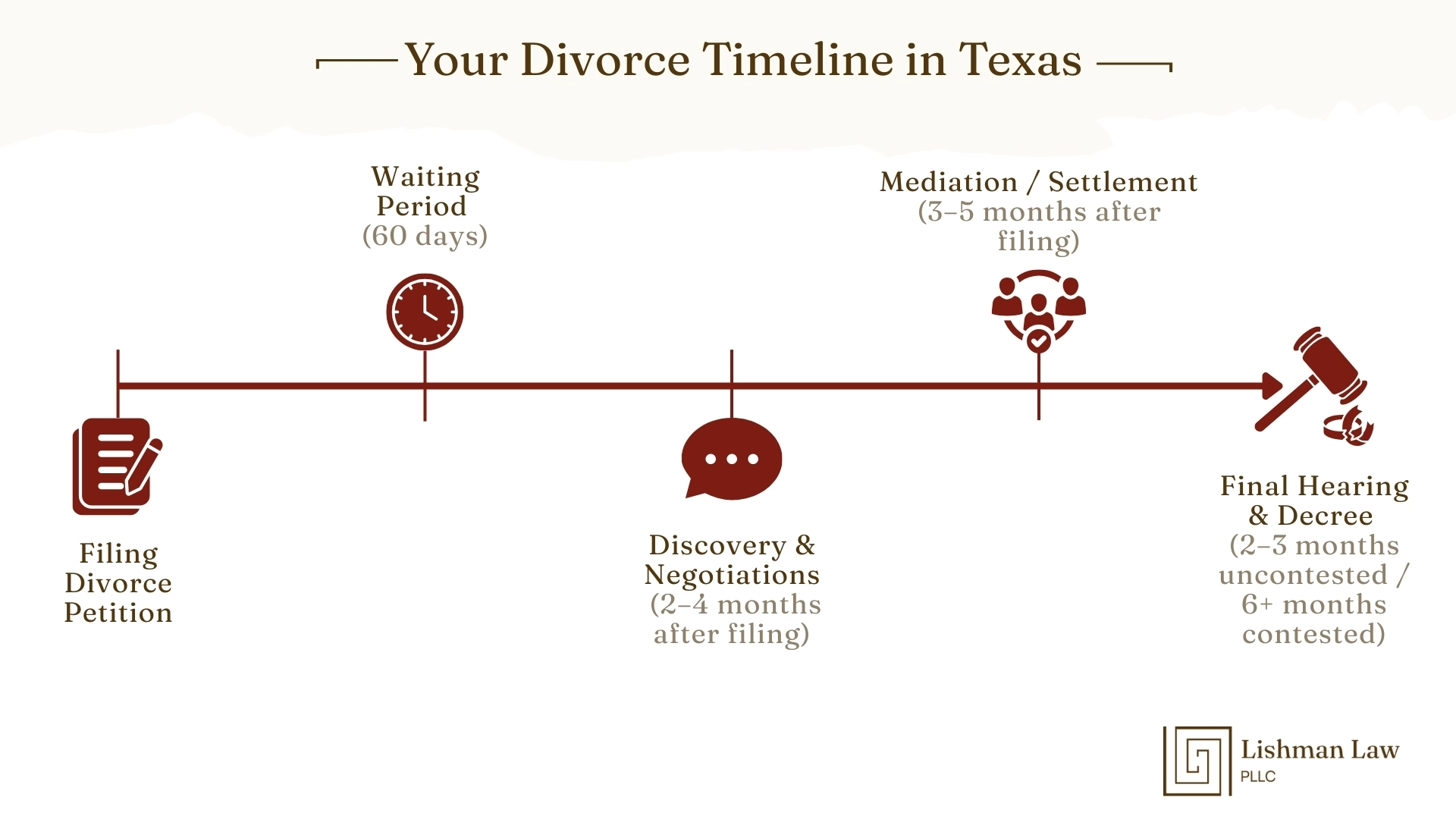
The Texas Family Code outlines a specific procedure that must be completed before a judge can finalize the dissolution of the marriage with a signed divorce decree. Here are the basic steps involved:
Filing the Divorce Petition
The process begins when one spouse, known as the petitioner, files a petition for divorce with the court in the county where either spouse has lived for at least 90 days. This filing date sets many deadlines in motion and initiates the formal legal proceedings. The petition is then served on the other spouse, who must respond within a set timeframe.
The 60-Day Waiting Period
Texas law requires a mandatory 60-day waiting period after filing before a judge can grant a final divorce decree. This internal, often called the “cooling-off period,” gives the spouses time to reflect and see if reconciliation is possible.
It’s worth noting that there are limited exceptions for cases involving domestic violence or when a protective order is already in place. In these situations, a judge may waive the waiting period.
Temporary Orders and Hearings
If the divorce involves child custody, child support, spousal maintenance, or questions about how to handle the marital estate, either spouse may request temporary orders. These orders set rules that stay in place while the divorce case is pending.
Scheduling hearings for temporary orders can take a few weeks, depending on court availability. Once in place, they help create structure and prevent conflict while the divorce moves forward.
Discovery and Negotiations

During this stage, both parties exchange necessary documentation about assets, debts, income, and other relevant details. This process, known as discovery, can be simple in uncontested divorces or time-consuming in contested divorces where the spouses disagree on property division or child custody arrangements.
Many cases are resolved here if the parties agree on terms, obviating the need for extensive court intervention.
Mediation or Settlement Discussions
Texas courts frequently encourage mediation, especially when disagreements exist regarding spousal support, child custody, or division of property. When spouses come to terms during mediation, they can present a settlement agreement to the judge for approval, often decreasing the time spent waiting for a court date.
Finalizing the Divorce
After reviewing and approving all terms, the judge will sign the final decree of divorce. This legally ends the marriage and lays out all orders regarding custody, child support, spousal maintenance, and property division.
The overall timeline between filing the initial petition and receiving the final decree depends heavily on how cooperative the spouses are and how busy the local courts may be.
Conditions That Can Slow Down the Divorce Process

Even when the spouses intend to keep things simple, several issues can extend the divorce timeline. Some are beyond anyone’s control, while others stem from disputes or a lack of information.
Common causes of delay include:
- Disagreements over custody, finances, or property division.
- Missing or incomplete court documents.
- Failure to provide necessary documentation about assets or debts.
- Scheduling conflicts or backlogged court dates.
- Requests for temporary orders or court intervention.
- Cases involving domestic violence or protective orders that require additional hearings.
- Disputes over spousal support, child custody, or child support.
Existing prenuptial or postnuptial agreements can also affect how long a divorce takes. When these agreements are clear and enforceable, they often simplify property division and spousal maintenance decisions. But if one spouse disputes the terms, the court must review their validity first, which can add extra hearings and delay the final decree.
Military divorces can also take longer, especially when one spouse is on active duty or stationed overseas. Additional steps are required under federal law and the Servicemembers Civil Relief Act before the case can proceed.
Even small disputes can turn a straightforward case into a lengthy legal proceeding, so it’s always helpful to approach negotiations with a clear plan and open communication.
How to Speed Up the Divorce Process
There are some practical steps spouses can take to make the divorce process move faster. Being organized and proactive can save you both time and money in the long run. Here are some key points:
- Consider an uncontested divorce: When both spouses agree on all major terms, the court process is usually straightforward.
- Hire the right legal representation: Retaining a skilled divorce lawyer will ensure that filings, deadlines, and court orders are handled promptly and accurately.
- Stay responsive: Returning calls or providing requested documents quickly helps avoid unnecessary delays.
- Communicate with the other spouse: If both parties agree to resolve issues early, the case will make its way through Texas’s court system faster.
- Use mediation when appropriate: Mediation often prevents drawn-out court hearings and helps the parties reach an agreement faster.
- File complete and accurate paperwork: Errors in the initial petition or financial disclosures can add weeks to your divorce timeline.
By prioritizing cooperation and procedural accuracy, spouses can often shorten the process and reach a final decree more efficiently.
Although every divorce takes a different path, most couples who stay organized and responsive can finalize things within a few months. A thoughtful approach, backed by experienced legal guidance, will keep the focus on what really matters: your peace of mind.
Where to Turn When You’re Ready to Begin
In Texas, the divorce timeline depends largely on how the spouses communicate, how quickly they provide the necessary documentation, and how efficiently each step is handled.
At Lishman Law, our competent family law attorneys bring structure and steadiness to an experience that can otherwise feel overwhelming.
If you’re ready to move forward with your divorce, schedule your consultation with us today. We’ll review your specific circumstances, explain your options under Texas law, and help you take the right steps toward a resolution that works for you.


Let an Experienced Divorce Lawyer Streamline Your Case
Our team can help you plan ahead, reduce delays, and avoid common pitfalls that may extend legal proceedings. Contact us today!